All posts by Frank Becker

SERIES MESSAGE #4: “THE THANKSGIVING OF THE PILLARS”

Jeremy Stopford photo
Jeremy Stopford

Originally preached November 18, 2012, by Rev. Jeremy B. Stopford

Today’s “Special”:  “A Tailor Funny”

A tailor’s shop was next door to a very upscale French restaurant. Every day at lunch time, the tailor sat out behind his shop and ate his black bread and herring while smelling the wonderful odors coming from the restaurant’s kitchen.

One day the tailor was surprised to receive an invoice from the restaurant for “enjoyment of food.” So he went to the restaurant to point out that he had not bought anything from them.

The manager said, “Every day you sit outside our kitchen and smell our food while eating.  We are providing added value to your lunch, and we deserve to be paid for it.”

The tailor stuck his hand in his pocket and rattled the few coins he had inside.

The manager asked him, “What is the meaning of that?”

The tailor replied, “I’m paying for the smell of your food with the sound of my money.”

INTRODUCTION

We have been gleaning the Scriptures for instances in which the 3 Pillars of the faith – Peter, James, and John – learned lessons from the Lord.  Today’s passage is not so much what they learned to do, but what they learned not to do.  Let’s see if we learn, too.      

PASTOR’S PRAYER   

KEY PASSAGE: “And when they had entered, they went up into the upper room where they were staying: Peter, James, John…these all continued with one accord in prayer and supplication, with the women and Mary the mother of Jesus, and with His brothers.” Acts 1:13a, 14

#1 THANKS FOR WHAT NOT TO DO 

  1. They did not wait (Acts 1:4)

Acts 1 is Dr. Luke’s introduction to “The Acts of the Apostles.” Many believe this book should properly be entitled, “The Acts of the Holy Spirit.” Was it the apostles who did the work of the early church? Or was it the work of the Holy Spirit in their lives Who did the work? If THEY does the work, who gets the glory? THEY did. But if the HOLY SPIRIT does the work, Who gets the glory? Careful. Think about your answer before you give it. Turn with me to John 15:26. John Chapters 14,15, and 16 are the Savior’s intimate teaching on the ministry of the One He was going to send to earth in His place shortly after the resurrection. After the Holy Spirit would be sent, the Savior assured His disciples that through His ministry they would carry on in ways they could not have during Jesus’ earthly service. How so? For 3 years, the disciples were walking with the Savior, talking with Him, listening to Him, serving with Him. Observing Him. They could only be in one place at one time. Through the ministry of the Holy Spirit, and in the same Power that operates in our Savior, they would be able to fulfill the command of the Great Commission and “go into all the world and preach…and teach…and make disciples.”

All they had to do was wait. 10 days. In fact, they should have understood the Old Testament “Day of Pentecost”. 50 Days after the Passover. Our Savior was on earth for the first 40 days before He ascended back to Glory. So simple math, if you will, tells us – and should have told them – there are 10 more days before the Spirit is sent down. 10 days. 10 measly days.

See also: 

Ps. 27:14:  “Wait on the Lord; Be of good courage, and He shall strengthen your heart; Wait, I say, on the Lord!”

    Psalm 37:9:  “For evildoers shall be cut off; But those who wait on the Lord, they shall inherit the earth.”

Isaiah 40:31:  “But those who wait on the Lord shall renew their strength; They shall mount up with wings like eagles, they shall run and not be weary, they shall walk and not faint.”

B. They had no power (Acts 1:8)

  Therefore, whatever they did before Acts 2, they did in their own strength!

Acts 1 is a sad commentary on how not to do ministry.

  How do we know?  Look at 1:15, “And in those days Peter stood up…”. Yes, he quotes Scripture. Don’t you think he has been reading and thinking much since Jesus ascended? He has been reviewing all the Scriptures concerning the death and resurrection of the Messiah. They are in there! Moses! The Psalms. The Prophets. They are in there! Peter has been thinking, “what has been happening to us?”. And don’t you think he came across Psalm 69 which he would know is a Messianic Psalm. He would read verses 24-25, as he shares in Acts 1, and thinks, “whoa! It was there all the time! Judas, who walked among us, would be the traitor among us. How did I miss that in Sunday school at the Baptist Church?” Well, perhaps that’s a slight liberty on Peter’s life. Then he would read Psalm 109:8-9 and see the words, “let another take his office.” And what must Peter have thought? “WE are God’s appointed ones to replace Judas with the 12th apostle.” So by casting lots – which seemingly were a perfectly good Biblical form of making choices – just look at those at the foot of the cross – they make their choice. They chose Matthias.

Look at 1:23-26. When was the last time you read about Matthias in the Scriptures?  Right here – he was never heard from again.  But other apostles were heard from again, in particular the Apostle Paul.

The Lord Jesus said, “wait.” WAIT! 10 days. 10 short days. They didn’t wait. Do we?

#2 THANKS FOR WHAT TO DO

Credit must be given to these early apostles, however. They were dealing with a whole host of emotions thrown at them and in them all at once. The Savior Who had been among them for over 3 years had been crucified. Buried. Rose again. Ascended to glory! And even the angels at the ascension said, “He will come again!!!!” They had much to take in! New truths. Fresh truths! Application of Old Testament truths!

And in the midst of their post-ascension scenes, in the midst of trauma they show all of us some wonderful foundations for thanksgiving.

A. They continued together (Acts 1:13) – they had disbanded at the time of the cross

They continued in one accord – not a Chevy or a Ford (Acts 1:14)

Of the 17 times the phrase “one accord” appears in Scripture, 11 of them are in Acts. That gives us an huge insight into not only the operation of the Holy Spirit in the early church, but also into the hunger of that early church to be the outward evidence of God’s love for the whole world! They were visible evidence of the application of the death, burial and resurrection of the Savior! “For God so loved the world that He gave His One and only Son, that whoever believes in Him should not perish but have everlasting life!” (John 3:16)

*  See also:  

Luke 14:18 [in reference to the response to the invitation to come be with the Lord Jesus]: “But they all with one accord began to make excuses. The first said to him, ‘I have bought a piece of ground, and I must go and see it. I ask you to have me excused.’” That’s the negative response!

  And Phil. 2:1-2 [the classic passage on the unity of the New Testament church in Philippi]:  “Therefore if there is any consolation in Christ, if any comfort of love, if any fellowship of the Spirit, if any affection and mercy, fulfill my joy by being like-minded, having the same love, being of one accord, of one mind.” And this is the positive response!

B. They continued in prayer and supplication (Acts 1:14) “These all continued with one accord in prayer and supplication…” Remember what they had begun with the Savior – just like our baby steps with Jesus. They were learning with Him how to have an intimate walk with Him. “Abba, Father” they heard Him pray. Now, with Him in Glory, they knew – they just knew – that in order to wait on the Savior their intimacy with Him was needed more now than ever!

C. They were people of the Scriptures (Acts 1:14,16). As said above, Peter did not simply pull these verses out of his spiritual rabbit’s hat! He was familiar with the Messianic Psalms. Our Savior had given the disciples lessons on the application of the Word of God. Peter actually listened! And as a result, the early church would be people of the Book. Once again is the probing question: are we?

CONCLUSION

Turn to Psalm 109, from which Peter guided his words of Acts 1

  Read 109:1-7

  Note v. 8, from which Peter quoted (referenced above)

  David is lamenting his enemies, while he himself is a man of prayer!

  And note HIS conclusion, vs. 30-31  In the midst of his enemies, of his uncertainties, of his life, he is a man of thanks:

“I will greatly praise the Lord with my mouth; yes, I will praise Him among the multitude.

For He shall stand at the right hand of the poor, to save him from those who condemn him.”

  The very psalm which is the root of Acts 1 is the heart of the thanksgiving of the pillars.

  So… are we thankful? Are you thankful?

CLOSE IN PRAYER

Intelligence

By Florida Senator John Grant, Retired

Week Thirty-Seven, 2019

The proverbs of Solomon son of David, king of Israel: for gaining wisdom and instruction; for understanding words of insight; for receiving instruction in prudent behavior, doing what is right and just and fair; for giving prudence to those who are simple knowledge and discretion to the young—let the wise listen and add to their learning, and let the discerning get guidance—for understanding proverbs and parables, the sayings and riddles of the wise. The fear of the Lord is the beginning of knowledge, but fool despise wisdom and instruction” (Proverbs 1:1-7).

Microsoft is investing $1-billion in Open AI, a partnership intent on creating artificial intelligence that rivals the human brain. Artificial intelligence as it currently exists involves training machines to solve specific problems or perform particular tasks, like filter spam emails or predict an earthquake. The Microsoft and Open AI collaboration will zero in on artificial general intelligence: machines capable of learning and operating just as well as, or even better than, a human.

Should AGI became a reality, it could be used to tackle humanity’s greatest ills. “We want AGI to work with people to solve currently intractable multi-disciplinary problems, including global challenges such as climate change, affordable and high-quality healthcare, and personalized education” Open AI wrote in a blog post announcing the partnership. “We think its impact should be to give everyone economic freedom to pursue what they find most fulfilling, creating new opportunities for all of our lives that are unimaginable today.”

Because AI will affect so many areas of life, Christians need to be prepared to maximize the benefits of such technology, take the lead on the question of machine morality, and help to limit and eliminate the possible dangers.

Spiritually, we understand our own limits because, being creations of God (Genesis 1:27), we can’t outdo God’s creative power (Isaiah 55:8–9). Also, God’s depiction of the future does not seem to include any kind of technological singularity (see the book of Revelation).

AI might be able to perform certain, limited tasks better than a person can, but there is no logical, philosophical, or biblical reason to think it can be “better” in a meaningful sense. AI might emulate the patterns human beings use when we think, but it can never replace the prowess, dexterity, and creativity of the human mind.

God is still the master creator of intelligence and it is real, not artificial.

***

SOMETIMES TRUE STORIES

Tolerance is the last virtue of a depraved society. When you have an immoral society that has blatantly, proudly, violated all of the commandments of God, there is one last virtue they insist upon: tolerance for their immorality. D. James Kennedy

— o —

In North Korea possession of a Bible is a capital offense and that regime officials have pledged to “wipe out the seed of Christian reactionaries.”

— o —

A stunning 83% of the world’s population lives in nations where religious freedom is threatened or even banned.” Mike Pence

— o —

The technology that enabled Apollo 11 to travel to the moon and back was remarkably effective and sophisticated for its day, but its computational capacity pales in comparison with the smartphone in your pocket.

— o —

Currently, the average American household carries $137,063 in debt, but only makes $59,039 in income per year. Debt to income ratio is an important measure of how people are handling their money. It’s not the only measurement, but it can tell us a lot.

— o —

77% of all Americans support Roe V. Wade

— o —

Pastor Kelly Knouse on Servanthood:

• Servanthood Begins with Attitudes Before Actions

• Servanthood Focuses on People Before Programs

• Servanthood Elevates the Mission Before Myself

— o —

Netflix Sees Historic Subscriber Drop, Loses 126,000 Customers After Threatening to Boycott Pro-Life Georgia

— o —

How courageous will you be for Christ today?

QUOTES YOU CAN USE

A New Planner Won’t Change Your Life.

Every other religious faith wants to escape the world, but Jesus wants us to renew the world. That must start with a renewal of ourselves. Phil Cook

My husband said he needed space, so I locked him outside. Anonymous wife

We were fixed by Jesus to be fixers of others. Fixed people fix others. Mondonico Williams

Never doubt that a small group of thoughtful, committed citizens can change the world; indeed, it’s the only thing that ever has. Jim Denison

The greatest mission field in North America is in the public school classroom. Kelley Knouse

***

“OBSERVATION OF THE PILLARS,” Part II

SERIES MESSAGE #2: THE OBSERVATION OF THE PILLARS” 

Originally preached 11-04-12 10:30 AM 

Rev. Jeremy Stopford, Retired Pastor

Key Verse: “Now as soon as they had come out of the synagogue, they entered the house of Simon and Andrew, with James and John.” (Mark 1:29)

Today’s “Special”:  “A Cut Above the Rest”:

A logging company needed to hire another lumberjack, and the first guy to apply was a short little skinny fellow, who was laughed at by the manager and told to leave.

“Just give me a chance,” the little guy pleaded.

“Okay,” the manager replied, “Grab your axe and cut down that cedar over there.”

Two minutes later he was back at the manager’s office, “Tree’s cut. Do I get the job?”

“I don’t believe it, that is so much faster than even my best lumberjack could have done it. Where did you learn to use an axe like that?” the manager inquired.

“Sahara Forest,” the little guy replied.

“Don’t you mean the Sahara Desert,” the manager corrected him.

“Sure, that’s what they call it now.”

INTRODUCTION: Last week we began a series about the ministry of Peter, James, and John – the 3 who were the closest to our Savior.  They heard 3 simple words, “Come, follow Me” – and they did and never looked back.  Today we look at the making of a disciple. And how is one made?  By observing the Master!

PRAYER 

#1  THEY OBSERVE JESUS’ LORDSHIP (Mark 1:1-15)

His baptism (vs. 1-11) – the Father is well pleased with obedience

His temptation (vs. 12-13) – the Spirit is well pleased with leading

His message (vs. 14-15) – the Word is always timely

#2  THEY OBSERVE JESUS’ SERVANTHOOD (Mark 1:16-45)

     Mark is the gospel writer who emphasizes Jesus’ serving.  So it shouldn’t surprise us that those who would one day be called “The Pillars” should be observing Jesus and how He served.

They heard Him firsthand (vs. 16-20) – is Jesus personal with you?

They heard His authoritative doctrine (vs. 21-28) – is Jesus your authority?

They saw His compassion (vs. 29-31) – do you bear His compassion?

They saw His methods – mainly preaching, preceded by prayer (vs. 32-39) – do you share His word?

They saw His opportunity (vs. 40-45) – are you walking where Jesus is working? 

CONCLUSION

We have 3 options as a result of this message:

Option #1:  when He says, “come follow Me”, we follow!

Option #2:  when He says, “come work with Me”, we work where He’s working!

Option #3:  When He says, “come follow, come work”, we say “I’m too busy, I’ll sit back and watch”.

Which responses most please our Savior?

Which responses most typifies you?

CLOSE IN PRAYER

Know the Future

Week Thirty-Four, 2019

Know the Future

By Florida Senator John Grant (Retired)

Because He lives, I can face tomorrow. Because He lives every fear is gone. I know He holds my life my future in His hands. —Bill Gaither

From ancient times, man has wanted to know the future. For a thousand years people consulted the Oracle at Delphi in ancient Greece in an attempt to know what the future held. It’s unthinkable to claim to know what people ten years or a thousand years from now will be doing. But I suspect they’ll still think and fear and hope and communicate with other people. And make predictions.

Futurology has always bounced around between common sense, nonsense and a healthy dose of wishful thinking. I have often thought of what it would be like to accurately predict the future. Imagine if I knew today what the stock market would do tomorrow. I could probably have enough to retire in a week.

Corporations have futurologists in their employment so long-term plans can accommodate long term needs. When I was in the Senate, we had to know how much revenue would be coming in so we would know how much to budget, so we quarterly Revenue Estimating Conferences.

There is constant speculation and anxiety in our culture about the future of American Christianity and the role of the church in the coming years. What will the faith look like ten, twenty, or fifty years from now? Why will some churches be forced to close their doors while others in the same zip codes thrive and grow? Nobody holds a crystal ball but all ministers and Christian leaders should think about these questions because the decisions we make now play a big role in shaping and molding the future. These decisions will also determine whether we are able to reach our children and grandchildren with the values of Christianity.

More important than knowing what will happen is doing things that will determine what will happen. Instead of fighting the world and focusing on what is wrong, Christians need to flood the world with examples of what is right.

The lifestyle of many Christians is not reflective of Biblical admonitions and that sends mixed signals to the world. Vast numbers of Christians have moved so far away from obedience to Scripture that they pick and choose doctrine to suit their own whims. This plague is so ubiquitous now in American Christianity that “cafeteria Christian” could describe a significant part of our community. Is your daily Bible engagement pretty much the length of time it takes to read a devotional while on the toilet?

Every other religious faith wants to escape the world, but Jesus wants us to renew the world. That must start with a renewal of ourselves. Public perception begins to change when other people see that you are serious.”

Too often Christians want to escape the world, but Jesus wants us to renew the world. In a culture like ours, we need to demonstrate first how faith in Christ makes a difference in how we live.

This must begin with a renewal of ourselves. Christianity is like a nail. The harder you strike it, the deeper it goes. How hard are you willing to hit the nail to help guide the church and society in the direction it should go in the future?

For Christians, the future is certain….. you can read about with certainty in the Bible.

***

SOMETIMES TRUE STORIES

We make a life by what we give:

The stewardship of our nation begins with our stewardship of ourselves. What resources has God entrusted to you? What gifts, abilities, financial means, and cultural influence are yours? Would you submit them to God’s Spirit and use them for his glory?

Winston Churchill observed: “We make a living by what we get, but we make a life by what we give.”

Will you give today? —Jim Denison

— o —

Northview Church in Indiana asks itself regularly: What would happen if the church packed up and left the state? Would anybody notice? Would anybody care? It turns out, people who owed $4 million in medical debt would.

The church, which operates seven campuses and averages about ten thousand people on a typical Sunday, conducts what it calls the Dollar Club four times a year. Each person in attendance is asked to contribute a dollar, which the church pools and uses to meet needs. The church typically raises between $6,000 and $10,000; the money goes to support foster families, help with medical bills, and so on. In May, however, the church told members they had a special opportunity and asked them to donate $3 or $4.

A few weeks later, the church partnered with a charity called RIP Medical Debt, one of the organizations that buys such debt from hospitals, doctors, and even investors, usually for a penny per dollar. The church donated $30,000 to this charity. Since some medical debt in Indiana was cheaper than normal, the charity then leveraged Northview’s donation to alleviate $4 million in debt.

— o —

Writer – Katherine Lee Bates, 1859 – 1929; Prolific American writer, college professor and scholar. She spent the summer of 1893 in Colorado teaching English. She recalled: “One day some of the other teachers and I decided to go on a trip to 14,000 ft. Pikes Peak. We hired a prairie wagon and near the top we transferred to mules. I was very tired. But when I saw the view, I felt great joy. All the wonder of America seemed displayed there, with the sea-like expanse.”

And Katherine completed the first draft of America the Beautiful on Pikes Peak.

***

QUOTES YOU CAN USE

Coaches have a “play book” for the game of football. Christians have the Bible for the game of life.

For we are given power not to advance our own purposes, nor to make a great show in the world, nor a name. There is but one just use of power, and it is to serve people. —GEORGE H. W. BUSH, in the prayer he wrote for his inauguration

The best preparation for tomorrow is doing your best today.

Remember that creating a successful marriage is like farming: you have to start over again every morning. —H. Jackson Brown

Tomorrow is promised to no one.

Revealing Your Feeling Is the Beginning of Healing. —Ken Whitten

***

MEET BROTHER AL

MEET “BROTHER AL”

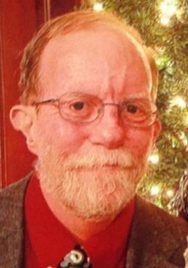
By Rev. Frank Becker

For over 50 years, it’s been my privilege and honor to be called a friend of Brother Al, Alexander W. Salay.

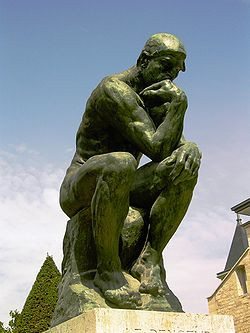
The Thinker, by Auguste Rodin

Of all the men and women I’ve known, he is perhaps best epitomized by the statue of Auguste Rodin’s, Le Penseur, “The Thinker.”

Through the years, God has often used Brother Al’s wisdom and counsel to guide me away from trouble and toward blessing. You may go directly to Brother Al’s website where there is much to encourage you: http://blessedman.net/

And in the weeks ahead, I hope to link many of Brother Al’s writings to this site.

-Frank Becker

“‘I AM SATISFIED WITH YOU, LORD’ REALLY?”

“‘I AM SATISFIED WITH YOU, LORD’ REALLY?

Camp Lookout 2019 August 21, 2019

Rev. Jeremy B. Stopford, Speaking

TODAY’S SPECIAL: “Stingy Rich Man”

A crumbling old church building needed remodeling, so, during his sermon, the preacher made an impassioned appeal looking directly at the richest man in town.

At the end of the sermon, the rich man stood up and announced, “Pastor, I will contribute $1,000.”

Just then, plaster fell from the ceiling and struck the rich man on the shoulder. He promptly stood back up and shouted, “Pastor, I will increase my donation to $5,000.”

Before he could sit back down, plaster fell on him again, and again he virtually screamed, “Pastor, I will double my last pledge.”

He sat down, and a larger chunk of plaster fell on his head. He stood up once more and hollered, “Pastor, I will give $20,000!”

This prompted a deacon to shout, “Hit him again, Lord! Hit him again!”

INTRODUCTION

“God Bless America” is a good theme for this week’s camp

Illustration: Yesterday I was following what I believe is the most patriotic truck I’ve ever seen! In the rear window were 3 decals: first, a decal of the American Flag; second, an Harley-Davidson decal; and then third, completing this wonderful ode to our country’s great values, a decal of the Miami Dolphins. Wow! You can’t get more patriotic than that.

As you may know by now, our patriotic hymn, “America the Beautiful,” was written by a schoolteacher named Katharine Lee Bates in 1882. Having climbed to the top of Pike’s Peak in Colorado, the view inspired her to write this hymn. The hymn was originally entitled “Pike’s Peak”, but by 1902 it had been changed to “America the Beautiful.” Note the words to the second stanza:

O beautiful for Pilgrim feet, whose stern impassioned stress

A thoroughfare for freedom beat, across the wilderness!

America, America, God mend thine every flaw

Confirm thy soul in self control, Thy liberty in law.

What would happen to our nation, to our church, to us, if suddenly each of the believers in particular suddenly were gripped with the spirit of “self-control”, or as is often called in Scripture, “satisfied”? What would the church look like? What would our nation look like? What would you and I look like?

AND how do we get there?

In the time we have together tonight, I want to share several Scriptural principles along with some applications of those principles. May the Lord use His word tonight to give us a fresh spirit of what it means to be a Christian that truly blesses America, much less is blessed by God!

PRAYER

There are 68 instances in which the word “satisfy” or variations appear in Scriptures. Let’s look at a few of them and ask ourselves the question, “does my life show that I am satisfied, truly satisfied, with You alone, Lord?”

PRINCIPLE #1: LAW OF FIRST USE (Exodus 15, esp. vs. 9-11)

Point: to show that the first use is God’s challenge that the enemy does NOT want God’s people to be satisfied in Him. Rather, the enemy wants His people to seek things first rather than seek Him first.

PRINCIPLE #2: LAW OF LIFE’S LESSON (Proverbs 19:23)

We either have the “fear of the enemy” or we have the “fear of the Lord”. Which or Who is our true satisfaction?

PRINCIPLE #3:GOD’S LOOKING FOR A FEW GOOD MEN (Dan. 3:16-19)

Key phrase: “but if not” (v. 18). That phrase is key to being satisfied.

At every crossroads of faith is the reality that a choice must be made.

There are only 12 chapters in the Book of Ecclesiastes. So if you wanted to, you could easily read the book through 3 times a month. This short book deals with the hunger of man for God and how man, as illustrated through the life of Solomon, has tried everything BUT God first in order to, ready?, satisfy that hunger. Let’s look at 3 of the instances that “satisfied” is used in this book, and through those uses make application to our principles.

APPLICATION #1: the world system is inherently empty (Ecc. 1:1-8,14)

APPLICATION #2: the toil of the world is inherently empty (Ecc. 4:4-8)

APPLICATION #3:the riches of the world are inherently empty (Ecc. 5:10-12)

CONCLUSION

#1 An illustration: From Frank Becker’s “Depression Proof Church”

A church that is truly satisfied is one which has no overhead debt and can be free to give 100% to missions. How about your church? My church?

Ask: which is greater, our debt for the building or our giving to missions? THAT is the criteria whereby we know our church is…satisfied before God.

#2 An invitation: From Isaiah 55:1-3

To breathe in the fear of the Lord and find true satisfaction in Him alone, initially through the cross, and throughout life through communion with Him and showing one’s life as proof that His fear, His worship alone satisfies the soul!

close in prayer

“THE CALLING OF THE PILLARS”

THE CALLING OF THE PILLARS”  (Luke 6:12-16)

Delivered at First Presbyterian Church, Winder, Georgia May 2, 2021

Guest Speaker, Rev. Jeremy B. Stopford, from Norwich, NY

Today’s “Special”:  Show and Tell of One’s Faiths

The Kindergarten Teacher gave a special “show and tell” assignment for the next morning: bring in objects that best represent your religion or faith. The next morning she called on Johnnie: “I’m Jewish. This beanie is a yamulche worn by all faithful Jewish men and boys.” Then little Susie raised her hand. She came forward and said, “I am a Roman Catholic. These are my rosary beads with which I pray.” “Thank you Susie. How about you, Billy. Billy also came forward and said, “I am a Presbyterian, and this is a casserole dish.”

Intimacy – we all have our definitions of it, we all know its abuses, we all know its wonderful uses.

Illustration: There were 2 pictures on Facebook this past week – perhaps you saw them. The first was of a young man when he first got his new puppy. They looked young. They looked like new friends. They look like there was a wonderful trust between them, but there was also an anticipation of all the uncertainties that were to come. The second was the same man and the same animal, but now taken 15 years later. The pup was now an older dog, quite graying around the muzzle and fur. And the man – he too was graying and older looking. But now there was something special – they looked close. Happy. United for life. What we call “intimacy”.

In Galatians 2:9 Peter, James, & John are called “pillars” – “support, monument.” From the 12 of these disciples, to the 3, to the 1 (John, “whom Jesus loved”).  This is intimacy. How did they get there?   PRAYER   

First, the CALLING OF the 3 INVOLVES PRAYER (Luke 6:12-16)

The Savior is about to call His disciples – so He peruses the countryside,  posts flyers on every telephone pole, has an interview session set up, and then picks the 12 best candidates.  That’s how WE might do it. Why, that might be also how we might go about calling a PASTOR!!!

How did JESUS call His followers? He prays all night FIRST! Luke 6:12-13 read, “ Now it came to pass in those days that He went out to the mountain to pray, and continued all night in prayer to God. 13 And when it was day, He called His disciples to Himself; and from them He chose twelve whom He also named apostles…”

Martin Luther said, “I have so much to do today, I must spend 4 hours in prayer”. Today’s generation is SO BUSY, so TV/cell phone/machine oriented. We just don’t have time to be still before the Lord!

In John Chapter 17, our Savior prays at the Garden of Gethsemane. Did you notice verse 20: ““I do not pray for these alone, but also for those who will believe in Me through their word…” – Jesus is doing the same today. He is praying for US to make a difference for eternity in the lives of those He has wisely placed around us!

So after He has been praying for US, are we intentionally making a difference for eternity in the lives of others? Why not this day PRAY FOR THEM as Jesus prayed for US!

Second, the CALLING OF the 3  INVOLVES PEOPLE AS PEOPLE  (John 1:29-31, 35-42)

All true salvation necessitates a proper view of Jesus (1:29-31)

First Jesus prayed (Luke 6), then He uses people where they are. He uses WHO?

How would you define the “JOB” of a Pastor? Have you read Ephesians 4:11-12 lately? “And He Himself gave some to be apostles, some prophets, some evangelists, and some pastors and teachers, 12 for the equipping of the saints for the work of ministry, for the [a]edifying of the body of Christ…”. WHO is accountable for the “work of the ministry”, according to the Apostle Paul here in Ephesians? The Pastor? NO! The pastor’s primary job is to train the people to do the work of the ministry! The Pastor can be only in ONE place at ONE time! You the congregation can be in 30-50 places at ONE TIME!!! So as much as the Pastor does in the week, how much MORE can be done if the WHOLE BODY of faith works TOGETHER to…DO THE WORK OF THE MINISTRY!

One of Scripture’s most wonderful words is “COME”! The Lord Jesus invited those who were seeking true faith to follow Him and…”COME AND SEE!”. See also Matthew 11:28-30 and Revelation 3:20. I officiate many funerals for those whose loved one had no church, no vocalized faith. How would YOU comfort the family? I almost always at the service quote or read Matthew 11:28-29: “Come to Me, all you who labor and are heavy laden, and I will give you rest. 29 Take My yoke upon you and learn from Me, for I am gentle and lowly in heart, and you will find rest for your souls.” Jesus didn’t invite people to a church or to a religion. NO! He invited people to HIM! To “come and see”. To “learn of Him”. And when the seeker finds that Jesus is worthy of their eternal trust, they will trust Him as their Savior! And then they will learn to trust Him for the every day walk of life!

The Beatles, back in the 1970’s or so, had a song called “Eleanor Rigby”. The chorus was “I look at all the lonely people…where do they all come from…where do they all belong?”

Jesus would ask us:  do we see people as people, or just faces?

Third, the CALLING OF the 3 INVOLVES PERSONALITIES (Mark 3:13, 16-17)

What did He do first?  Went up to the mountain and prayed (v. 13)

Simon (“that hears; that obeys“) becomes “Peter” (“rock”; “stone”)

James, John He sees them as “sons of thunder” (Mark 3:17) – an indication of their explosiveness – sometimes to talk before they think; sometimes wanting to act with fire for the Lord. In Luke 9:51-56 they wanted to call down fire upon a city which did not trust Jesus. Jesus wisely admonished James and John (Luke 9:56), “For the Son of Man did not come to destroy men’s lives but to save them.”

Jesus not only sees people as people, He sees them as unique servants with proper places in His kingdom. See Paul’s instruction in Romans 12:1-8. God has given each of His children “gifts” in which we can WISELY serve Him where He WISELY puts us!

Fourth and finally, the CALLING OF the 3  INVOLVES PURPOSE (Luke 5:1-11, esp. vs. 10-11)

See Luke 5:1-10 – can Jesus be a better fisher than experienced ones? In Luke’s account, these seasoned fisherman had unsuccessfully fished all night. In the morning, they were ready to give up, put their nets away. They had been working in their own strength.

THEN JESUS MET THEM! He said, “go out again and cast out your nets.” Simon explained their lack of success, but then added, “nevertheless at Your word I will let down the net.” Some 153 FISH came into the nets. From that lesson, the seasoned fisherman Peter said to the Savior, ““Depart from me, for I am a sinful man, O Lord!”

See Luke 5:10b, 11 – God has a purpose for His changing hearts. The Savior wisely shared with them, “Do not be afraid. From now on you will catch men.” 11 So when they had brought their boats to land, they forsook all and followed Him.”

CONCLUSION What lessons did we learn today:

#1  All decisions should be first preceded by prayer

#2  The Lord’s work requires seeing people as people

#3  The Lord sees the big picture in what He will do with His saints

#4  The Lord’s greatest purpose is eternal

Have you entered into this intimacy?

CLOSE IN PRAYER

“New Life”

By Joy Becker, MA

My life hovers now in timeless space
I taste the breath of new,
Leaving me spaces blank and unknown
What kind of glory is this?

How can I endure such beauty — to have
my path strewn with opening blossoms. Golden light
Illumines the path
God Himself.

And I am here: present—
Soaking in this knowing
The taste sweeter than manna
And wine from the deepest well.

How could You know this way
What I need, a place for me now to work and play
A river of delight.
I am undone with joy.

Even in the sorrows of worn down selves,
Needing to be pulled from the pit – the C word
I know there is more.
I can’t wait to see—
To light the lamp given me.

Oh God,
My heart is taken. Sealed!
My heart is glad and will be
Until the light lessens and
Is no more.
See? I am yours.

Salt

Week Thirty-Two, 2019

By retired Florida Senator John Grant

“You are the salt of the earth, but if salt has lost its taste, how shall its saltiness be restored? It is no longer good for anything except to be thrown out and trampled under people’s feet” (Matthew 5:13).

We stood in awe a thousand feet below the surface in the salt mines of Krakow Poland. Dating back before the thirteenth century, these mines were of valuable importance economically and militarily. At one time, salt the greatest preservative had a value equal to that of gold.

In ancient times Salt was of crucial importance economically. The expression “not worth his salt” stems from the practice of trading slaves for salt in ancient Greece. Special salt rations given to early Roman soldiers were known as “salarium argentum,” the forerunner of the English word “salary.”

Salt is a necessity of life and was a mineral that was used since ancient times in many cultures as a seasoning, a preservative, a disinfectant, a component of ceremonial offerings, and as a unit of exchange.

The Bible contains more than forty verses about salt. The symbolism of salt is that It purifies. The Bible mentions that Sodom and Gomorrah were purified with salt. Sinners are changed into pillars of salt, and we can ward off evil and deter unwanted strangers by spreading salt. However, salt can also kill. It kills weeds, corrodes, dries up and can make water undrinkable.

Although salt is powerful in historical and metaphorical terms, its spiritual power often goes unnoticed. Jesus said that we are “the salt of the earth” and “the light of the world”. Being salt and light is not optional. Jesus did not say you can be…or you have the potential to be…He said you are.

Everyone who has trusted Christ for salvation and is born again is the salt of the earth and the light of the world. Jesus told His followers they were the salt of the earth. This was an obvious metaphor for how they should impact the world around them.

Jesus uses those who love and follow Him to help preserve this fallen world that has turned its back on Him. Jesus also uses you to spread the Word in a way that is easier for others to understand, easier for them to hear and digest, by adding flavor and depth to your words as you share the gospel. Salt brings out distinct flavors in food, just as believers can bring out the words of God to impact listeners in a positive way. Those who know Jesus, radiate His joy, and share His love add flavor to the world.

Are you spreading salt in this fallen world?

***

SOMETIMES TRUE STORIES

When David found himself confronted by enemies (Psalm 139:19–22), here was his prayer: “Search me, O God, and know my heart! Try me and know my thoughts! And see if there be any grievous way in me, and lead me in the way everlasting!” (vv. 23–24).

What hard place is your address today?

Would you make David’s prayer yours right now?

— o —

This ‘n That about Bats

• The bat is the only mammal that can fly. Bats are crucial for a healthy environment. Bats disperse seeds, eat loads of harmful insects and help pollinate plants.

• There are more than 1,300 bat species distributed across six continents; about 50 bat species live in national parks across the United States, and Indonesia hosts 219 bat species—more than any other country.

• According to Bat Conservation International, bats make up one-fifth of the mammal population on Earth.

— o —

Chris Seiple is a graduate of Stanford and the Naval Postgraduate School with a PhD from The Fletcher School of Law & Diplomacy. He is a former Marine infantry officer and a founding member of the Pentagon’s Strategic Initiatives Group. He is also living with stage 4 cancer and a brain tumor.

Writing in the Washington Post, Dr. Seiple focuses on living today while trusting Jesus for tomorrow. He testifies: “I am grateful for the blessing of living in the present, between the ‘already’ and the ‘not yet.’ In the Bible, Jesus asks his followers: ‘If he made and cares for the ‘lilies of the field’ in all of their finite beauty, how much more will he care for us?’”

Dr. Seiple concludes: “I believe death is but the doorway to the rest of life, but until it is time to step through, I want to live like the lilies, expectantly, with enough for today.”

So should we. —Jim Denisen

Bold

***

QUOTES YOU CAN USE

“Without religion, I believe that learning does real mischief to the morals and principles of mankind.” —Benjamin Rush (1783)

Some have more degrees than a thermometer but without Christ are still lost.

“We cannot be forgiven unless we are willing to forgive.” —John Morgan

“Be sure your sin will find you out” (Numbers 32:23). God’s word adds, “Whoever walks in integrity walks securely, but he who makes his ways crooked will be found out” (Proverbs 10:9).

Sin always costs more than it pays. The time to repent and make restitution is now. —Jim Denison

***