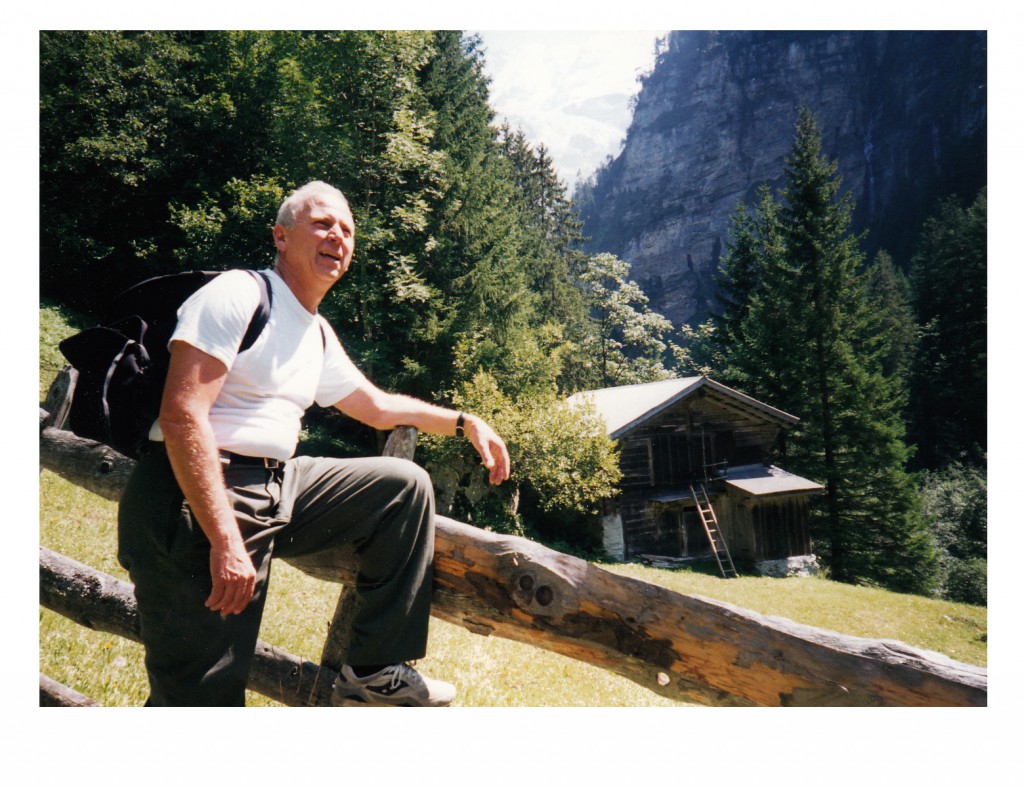
Frank in the Swiss Alps, below the ski resort used in a James Bond movie.
If you are thinking of tearing down a statue, breaking a store window, or attacking someone for their beliefs, consider these words:
“He who is without sin among you, let him cast the first stone.” Our forefathers weren’t perfect. But they risked and often sacrificed their lives, their fortunes, and their sacred honor in order to bring forth the greatest nation in the history of the world.
Before you cast a stone, consider your own motives.
As a nation, we aren’t perfect, but we have come a long way. Let’s not destroy everything that those “less-than-perfect people” sacrificed in order to bring us this far!
Think carefully before becoming part of the “Cancel Culture!” It will ultimately cancel you!
“Anyone who doesn’t breathe is dead, and faith that doesn’t do anything is just as dead!” (James 2:26 CEV)
It’s a term commonly used in the business and investment world….. ROI, short for return on investment. Anyone who makes an investment or launches a business endeavor usually does it to make money. You want to ultimately take out more than you put in and that extra above your initial investment is your return on the investment.
There is a Christian ROI and that stands for return on involvement. One of my favorite books in the Bible is the book of James. It is a general letter addressed to Christians scattered throughout the Roman Empire. Though written as a letter, it is more like a short book of instructions for daily Christian living. It shows faith in action in wide and practical ways.
We are called to active Christian involvement in our living. Not only should our lives be different, but we are called to make a difference in others. James asks what good is it if you say you have faith and then do nothing to show that you really have faith.
He gives an example that if you know someone who has no clothes or food and you say, “I hope all goes well for you and I hope you will be warm and have plenty to eat”. What good does it do to say this unless you do something to help.
Faith that doesn’t lead us to do good deeds is all alone. We are called to have a living faith. The Word of God is alive and active (Heb 4:12). As Christians we ought to put our best efforts into fulfilling God’s will. We should please God by what we do and not just by what we believe.
How active is our faith in how we deal with others? What is your return on your Christian involvement?
Remember that your life may be the only Gospel that some people will ever read. James concludes Chapter 2 with such a pertinent and true verse: Anyone who doesn’t breathe is dead, and faith that doesn’t do anything is just as dead!
***
SOMETIMES TRUE STORIES
In 2001 psychologist Dr. Edward Hallowell published, “Connect.” He wrote:
“We are a nation of doers. We hurry from place to place, filling our lives with all kinds of activities, sometimes over-scheduling our kids and ourselves. But what really sustains us emotionally, psychologically, and physically is connectedness; the feeling that we are a part of something that matters, something larger than ourselves that gives life meaning.
Just as there is a vitamin deficiency, there is a human contact deficiency, and it weakens the body, the mind, and the spirit. It ravages, can be severe depression, physical illness, or even early death. Or it can be mild like underachievement, fatigue, and loneliness.
Just as we need vitamin C each day, we also need a dose of human contact each day with other people. Do you miss your church when you cannot be with them?
— o —
Hmmmmm?……. Soon, every baby boomer will be at least 65. Experts say that as a nation, we are not prepared for such a huge demographic shift. I wonder if this would be the case if American’s had not aborted nearly fifty million babies since boomers were born and abortion became legal…….. just wondering.
— o —
Two Life Rules About Church Harmony:
1. Think the Best, Not the Worst
2. Speak to the Person, Not About the Person
***
QUOTES YOU CAN USE
Our Bible is not a rule book. It’s a Relationship Book. Ken Whitten
I tried to walk a mile in my friend’s shoes, but it took so long to find a pair that would match my outfit. An entitled believer
Life decisions we make can be either a tipping point or a trapping point in our lives. Rob Taylor
God is more interested in answering our prayers than we are in asking them. Charles Spurgeon
We don’t need a platform or a position to share the Good News. Kelly Knouse
Christians spend more money in the streets than the followers of other religions spent in their temples. Historian Eberhard Arnold
In the flickering glare of the fanatic flames that threaten to consume the heart of our nation, Jeremy Stopford has submitted a sermon he preached many years ago. In it, he quotes a post-Civil War prayer made by Robert E. Lee:
“May God rescue us from the folly of our own acts, save us from selfishness, and teach us to love our neighbors as ourselves.”
In a sense, Lee’s prayer began to be answered before he asked, when his Army of Northern Virginia lost the last great battle of the Civil War. America began its ascent from the evils of slavery, and God helped us to start up what has become the long road to equality. But now people are sowing the dragon’s teeth of hatred and division. We must ask ourselves whether selfishness and hatred will keep us from ever attaining that goal?
In light of current events, and the attempts by some to erase the facts of history, we should ask ourselves whether we are now producing a climate where similar things can again occur.
The Jewish people wisely build Holocaust Museums because they do not want the evils that befell them and millions of others to be forgotten. George Santayana said, “Those who cannot remember the past are condemned to repeat it.” A word to the wise is sufficient.
In the flickering glare of the fanatic flames that threaten to consume the heart of our nation, Jeremy Stopford has submitted a sermon that he preached many years ago. In it, he quotes a post-Civil War prayer made by Robert E. Lee:
“May God rescue us from the folly of our own acts, save us from selfishness, and teach us to love our neighbors as ourselves.”
In a sense, Lee’s prayer began to be answered before he asked, when his Army of Northern Virginia lost the last great battle of the Civil War. America began its ascent from the evils of slavery, and God helped us to start up what has become the long road to equality. But now people are sowing the dragon’s teeth of hatred and division. We must ask ourselves whether selfishness and hatred will keep us from ever attaining that goal?
In light of current events, and the attempts by some to erase the facts of history, we should ask ourselves whether we are now producing a climate where similar things can again occur.
The Jewish people wisely build Holocaust Museums because they do not want the evils that befell them and millions of others to be forgotten. George Santayana said, “Those who cannot remember the past are condemned to repeat it.” A word to the wise is sufficient.
—Frank Becker
Retired Pastor Jeremy & Thuvia Stopford
“Would You Be Free?” (John 8:31-36)
Originally preached on the 4th of July weekend, July, 2009
By Pastor Jeremy Stopford
TODAY’S FUNNY: “4th of July SPECIAL”
The Fourth of July was coming up, and the nursery school teacher took the opportunity to tell her class about patriotism. “We live in a great country,” she said. “One of the things about which we should be happy is that, in this country, we are all free.”
One little boy came walking up to her from the back of the room. He stood with his hands on his hips and said, “I’m not free. I’m four.”
INTRODUCTION
This weekend we have celebrated the 233rd birthday of our great nation.
Today’s sermon title is taken from a cry from the post Civil War era. One of the great southern generals of that war, Robert E. Lee, a godly man, said this: “May God rescue us from the folly of our own acts, save us from selfishness, and teach us to love our neighbors as ourselves.”
Out text today would teach us that true freedom comes at great cost – not only to our Savior, but to us was well. At the end of the message I will ask you the following question; “are we willing to pay that price?”
PRAY for God’s blessings on this ministry today
Scripture Reading, John 8:31-36
31 Then Jesus said to those Jews who believed Him, “If you abide in My word, you are My disciples indeed. 32 And you shall know the truth, and the truth shall make you free.” 33 They answered Him, “We are Abraham’s descendants, and have never been in bondage to anyone. How can You say, ‘You will be made free’?” 34 Jesus answered them, “Most assuredly, I say to you, whoever commits sin is a slave of sin. 35 And a slave does not abide in the house forever, but a son abides forever. 36 Thereforeif the Son makes you free, you shall be free indeed.“
#1 TRUE FREEDOM COMES FROM ABIDING IN THE TRUTH (8:31-32)
“Those Jews who believed in Him” – that was their “profession of faith”. Have you made a “profession” or do you have a “possession” of faith? There is an HUGE difference. There are many “professors”of Biblical Christianity. Our churches are filled with “professors”. But the narrow road has the only “possessors” of faith. So, are you a professor or a possessor?
Jesus challenged the professors of faith to prove their possession by their abiding – NOT in the temple but in the TRUTH! What priority does this Book have in your life? What priority do its instructions have in your life? What priority does the Lord Jesus and His Lordship on display in EVERY area of your life have in your life.
Note the dynamic teaching on this subject in John 15:1ff:
“I am the true vine, and My Father is the vinedresser. 2 Every branch in Me that does not bear fruit He takes away; and every branch that bears fruit He prunes, that it may bear more fruit. 3 You are already clean because of the word which I have spoken to you. 4 Abide in Me, and I in you. As the branch cannot bear fruit of itself, unless it abides in the vine, neither can you, unless you abide in Me. 5 “I am the vine, you are the branches. He who abides in Me, and I in him, bears much fruit; for without Me you can do nothing. 7 If you abide in Me, and My words abide in you, you will ask what you desire, and it shall be done for you. 16 You did not choose Me, but I chose you and appointed you that you should go and bear fruit, and that your fruit should remain, that whatever you ask the Father in My name He may give you.”
If true freedom comes from abiding in the truth, are you free? IF NOT, Jesus is saying you are in bondage still!
#2 TRUE FREEDOM CAUSES DIVISION (8:33)
Jesus’ words caused the Jews to cling to their heritage of a works-oriented religion rather than to the freedom that is in Christ.
A simple truth created a division, which is still created today! Are you clinging to the cross, or to membership in First Baptist? To the cross, or to anything else?
Then Jesus says, you are in bondage and not free!
Listen to the sobering truths of Galatians 2:16-20:
16 knowing that a man is not justified by the works of the law but by faith in Jesus Christ, even we have believed in Christ Jesus, that we might be justified by faith in Christ and not by the works of the law; for by the works of the law no flesh shall be justified. 17 “But if, while we seek to be justified by Christ, we ourselves also are found sinners, is Christ therefore a minister of sin? Certainly not! 18 For if I build again those things which I destroyed, I make myself a transgressor. 19 For I through the law died to the law that I might live to God. 20 I have been crucified with Christ; it is no longer I who live, but Christ lives in me; and the life which I now live in the flesh I live by faith in the Son of God,who loved me and gave Himself for me.
#3. TRUE FREEDOM CLINGS TO THE SON, NOT TO SIN (8:34-36)
This point comes down to one thought: do we love the Son of God, or do we love the sin of man?
How can we tell?
To what or Whom are you in bondage?
Does your world revolve around yourself and your lusts, or does it revolve around the Son and His Lordship, His glory?
CONCLUSION
THE BIG QUESTION!!! Are you in bondage to sin, or free in Christ?
The answer tells not only your eternal, but your daily joy!
Are we willing to pay the price that boldly states, “The Lord Jesus ALONE is my Hope – I am free in Him!”
“Some trust in chariots, and some in horses: but we will remember the name of the Lord our God” (Psalm 20:7).
Horses and chariots were instruments of war and demonstrations of power and victory. The chariot was a type of carriage driven by a charioteer and pulled by horses to provide power and speed. The earliest spoke-wheeled chariots date to 2000 BC and were instrumental in many notable conflicts in history.
Chariot
Chariots had scythes at the sides which rotated with the wheels as they drove with fury among the enemy, cutting down like they were mowing grass. Mere ownership of these beasts and weapons were a statement and demonstration of power and many tribes and countries put their trust for security in the mere possession of these dangerous weapons of war.
Throughout history nations, even today, put their security in their military might. Individuals put their security in their financial strength, their positions and possessions. We depend on external things, fleshy privileges and outward works of righteousness. These are our modern-day idols and as we have seen in recent weeks they can be gone in a flash. Solomon said it in Proverbs 11:28, “He who trusts in his riches will fall.”
Real life security comes from our salvation. Isaiah said it in Isaiah 12:2, “Behold, God is my salvation; I will trust, and will not be afraid; for the LORD GOD is my strength and my song, and he has become my salvation.”
While many, even most, look around themselves for security, the Scriptures tell us to look up because our help comes from the Lord, as He will not allow our foot to slip and will protect us from evil. Psalm 121
David best summed it up in Psalm 20:7… “Some trust in chariots and some in horses, but we trust in the name of the LORD our God.”
Where is your trust?
***
SOMETIMES TRUE STORIES
Three Things Happen When You Have Quiet Time: Ken Whitten
1. God is Glorified – Psalm 50:23
2. Faith is Fortified – Isaiah 26:3
3. Soul is Satisfied – Psalm 16:11
— o —
It seems to me that if we want to see revival… that if we want to see God do a great work… if we want to see God move, then it begins with us on our knees in prayer individually and together. Marty Stubblefield
— o —
“Rejoice always, pray without ceasing, give thanks in all circumstances; for this is the will of God in Christ Jesus for you” (1 Thessalonians 5:16-18).
“LEAVING HOME – DESTINATION UNKNOWN” (Genesis 12:1-11)
By retired Pastor Jeremy Stopford
Originally preached “Graduate Recognition Sunday, June 12, 2011
TODAY’S FUNNY: “Words not yet in the dictionary”
A graduate needs to be prepared to learn new words – especially ones which have not yet been entered into the dictionary. For today’s enjoyment:
“Elbonics” = “noun, the actions of two people maneuvering for one armrest in a movie theater”
“Petonic” = “adjective, one who is embarrassed to undress in front of a household pet”
“Phonesia” = “noun, the affliction of dialing a phone number and forgetting who you were calling just as they answer”
“Pupkus” – “noun, the moist residue left on a window after a dog presses its nose to it”
“Intaxication” = “noun, euphoria at getting a refund from the IRS, which lasts until you realize it was your money to start with”
INTRODUCTION
You are headed on an exciting journey, many of you leaving home for the first time. And when all is said and done, perhaps you will finally settle down in a place which you could not have imagined today. Abram, now called Abraham, went through a similar experience. It is good to learn from those who have already walked the path you are about to walk.
PRAYER
1. “HARAN” – A PLACE WE CALL HOME (Genesis 12:4)
“So Abram departed as the Lord had spoken to him, and Lot went with him. And Abram was seventy-five years old when he departed from Haran.”
ILLUSTRATION: The student was in his first college class, English. The professor began the first class of the semester with this warning: “There are two words I don’t allow in my class. One is ‘gross’ and the other is ‘cool’.
And the student asked, “Yes, so what are the words?”
Everybody has a place we call “home”. My hometown will always be Rye, New York, about 30 miles north of New York City. Home of John Jay, one of the signers of the Declaration of Independence, and first justice of the Supreme Court. Rye was home of Playland Park, which was home of one of the older wooden roller coasters in the country. Playland was also home of one of the main scenes of Tom Hanks movie, “Big”. According to Wickpedia online encyclopedia, “In 2010, Coldwell Banker reported that Rye was the third most expensive city in the country in which to buy a home.” Thus it was a good reason why when my Dad retired in the 1960’s, we moved to Ft. Lauderdale. I only spent 8 years in Rye, but I still call it my Hometown.
“Haran” means “strong, enlightened”. It was Abram’s hometown. It is still in existence. It was home of the worship of multiple deities of the Chaldeans. Its residents had many choices, just like us.
Where is YOUR hometown? More importantly, as with Abram, where is the home town of your heart? Are you searching out which of many seemingly nameless gods to worship? Are you hoping to find the true Deity when you leave home? I imagine so did Abram!
2. “SHECHEM” – A PLACE OF INTRODUCTION (Genesis 12:6)
“Abram passed through the land to the place of SHECHEM, as far as the terebinth tree of Moreh. And the Canaanites were then in the land.”
“Shechem” means “shoulder”. It was a Jewish city of refuge where the criminal could go if he was seeking a proof of his innocence. It later was called by the Romans “Neapolis”.
It was the place where God introduced Himself to Abram (verse 7). There is no recorded worship reciprocated to God by Abram. It was simply where God introduced Himself to Abram, and gave him promises. Abram builds an altar, but there is no formal worship, only a seeking, a ritual.
It was there that Jesus introduced Himself to a woman at a well (John 4). For some of you, today might be your introduction to the true God.
Let’s look at the progression of that introduction:
#1. Jesus: “Give me a drink” (from this well”
Woman: “How is it that You, A JEW, ask drink from me, a Samaritan woman?”
ARE YOU JUST A MAN?
#2. Jesus: “If you know Who I am, I’ll give you living water.”
Woman: “Are you GREATER THAN OUR FATHER JACOB, who dug this well?
ARE YOU GREATER THAN A GREAT FIGURE IN OUR HISTORY?
#3. Jesus: “You drink from this well, you’ll thirst again.
You drink of the water I give, you’ll never thirst again, but have everlasting life.”
Woman: “Give me this water.”
Jesus: “Go call your husband.”
Woman: “I have no husband.”
Jesus: “You have well said – you’ve had 5 husbands, and now you’re living with a man.”
Woman: “Are you a PROPHET?”
ARE YOU A PROPHET – A RELIGIOUS PERSON OF GREAT PROMINENCE?
#4. Woman: “Jerusalem is THE PLACE to worship.”
Jesus: “God desires worship in spirit and in truth.”
Woman: “I know THE MESSIAH is coming.”
Jesus: “I AM HE.”
Woman: “Come see a Man Who told me all things that I ever did.
Could this be THE MESSIAH?”
CONCLUSION: HE IS THE MESSIAH!
3. “BETWEEN BETHEL AND AI” – A PLACE OF COMMUNION (12:8)
“ And he moved from there to the mountain east of Bethel, and he pitched his tent with Bethel on the west and Ai on the east; there he built an altar to the Lord and called on the name of the Lord.”
“Bethel” means “House of God”. It was located about 12 miles from Jerusalem, and is still good pastureland. “Ai” means “a place of ruins”, it was so called as it was established only to be a military outpost, not a settled city.
But it was between these 2 points that Abram not only built another altar – a place of marking – but also he called on God, a place of COMMUNION. We’ll see later that when Abram wandered from this place, he had to return there in order to restore the sweetness of his understanding of Who God is.
4. “EGYPT” – A PLACE OF EMPTINESS (12:9-10)
“So Abram journeyed, going on still toward the South. Now there was a famine in the land, and Abram went down to Egypt to dwell there, for the famine was severe in the land.”
ILLUSTRATION: The English test had only one question: “Write an essay on ‘The Most Beautiful Thing I Ever Saw.’”
One of the students finished his essay in less than a minute. It read in its entirety: “The most beautiful thing I ever saw was just too beautiful for words.”
He got the only A in the class!
For many, that is what Egypt is. Note that the famine was still in Bethel as well as in Egypt. God was in Bethel, but Abram chose to go to Egypt, the place of the world, where God did not chose to make Himself known.
And you will find, as Abram did, that when you leave the place of God’s presence, you have entered the place of emptiness. It not only IS empty; it leaves you empty as well. Abram was EMPTY.
And to get back to where he was full of God’s presence, he had to go back to where he left off – Bethel.
CONCLUSION
Hebrews 11:8-10 tell us that Abraham responded BY FAITH! God wonderfully calls every step – every “place” of our lives – our “journey”.
The most important point is this: IDENTIFY where you are in this journey. Are you:
1. HOME – a place of seemingly ENDLESS CHOICES, but the one from which I begin my journey.
2. A place of INTRODUCTION – where I first hear about the one true, intimate, personal God, Who loves me with an everlasting love. Where is your place of INTRODUCTION?
3. A place of COMMUNION – where you came to the cross and found Jesus to be true and worthy of your every day.
4. A place of EMPTINESS – where the world is and all it has to offer with its thrills and high prices, with a high cost for those who fall. If you are here, get back to where you left off.
By retired Florida Senator, John Grant, Week 25, 2020
“But when you give to the needy, do not let your left hand know what your right hand is doing, so that your giving may be in secret. And your Father, who sees what is done in secret, will reward you” ( Matthew 6:3-4).
While walking across a college campus I was struck by the fact that every building had someone’s name on it. America has been built on philanthropy. Last year American’s gave over $410 billion to all sorts of charities. But is giving in exchange for naming rights really giving, really charity or is it purchasing? I think the act is more of a purchase. The Bible says that too.
Whether he was talking about a widow giving an offering at the temple, a young rich man giving up his wealth, or his followers who gave a cup of cold water to someone in need, Jesus repeatedly reminds us that giving to others is a way to honor God. We should give from the heart.
Recently in our town there was a perfect example of how to give. Last December, an anonymous donor dropped two ancient Greek gold coins into a red Salvation Army kettle outside of a local grocery store. The gold coins date back to 42-40 B.C. Wrapped around one of the coins was a note signed simply “Doing the most good.”
Each coin had a gold value of around $450, but “the collector value was more.” The coins were manufactured between 42 and 40 B.C. One side features a Roman consul accompanied by two lictors, who were civil servants who acted as attendants or bodyguards in ancient Rome. The other side displays an eagle with spread wings that is standing on a scepter and clutching a laurel wreath in its right talon.
One of the nation’s largest coin dealers offered to sell the coins at no charge, so they put them up for auction………
In our town there is a church with a large educational building given totally by a donor. A plaque was placed at the front door detailing who gave and how much. The donors directed it then be covered in concrete so no one would know.
Jesus warned: “So when you give to the needy, do not announce it with trumpets, as the hypocrites do in the synagogues and on the streets, to be honored by others. Truly I tell you, they have received their reward in full.” (Matthew 6:2)
Think of this when you give. Don’t “blow your own trumpet”, but do it in secret keeping it under a bushel. God will be rewarded, and you will be blessed.
***
SOMETIMES TRUE STORIES
A mother once approached Napoleon seeking a pardon for her son. The emperor replied the young man had committed a certain offense twice and justice demanded death.
“But I don’t ask for justice,” the mother explained. “I plead for mercy.”
“But your son does not deserve mercy,” Napoleon replied.
“Sir,” the woman cried, “it would not be mercy if he deserved it, and mercy is all I ask for.”
“Well, then,” the emperor said, “I will have mercy.” And he spared the woman’s son.
— o —
Don’t copy the behavior and customs of this world, but be a new and different person with a fresh newness in all you do and think. Then you will learn from your own experience how his ways will really satisfy you (Romans 12: 2).
***
QUOTES YOU CAN USE
The question is not rather you were saved but rather are you saved. Ken Whitten
Fear of God is the continued awareness that I am in the presence of a Holy and Almighty God and that every thought, word, action and deed is open before Him and is being judged by Him. Ken Whitten
To have knowledge, you must first have reverence for the LORD. Stupid people have no respect for wisdom and refuse to learn. Proverbs 1:7 GNT
Justice is getting what you deserve. Grace is getting what you don’t deserve. But mercy is not getting what you deserve.
By Rev. Jeremy Stopford, Retired Pastor, Father’s Day, 2014
TODAY’S SPECIAL: “To George Washington ”
A young boy on his way to school one morning passed the outhouse by the pond behind his home.
All of a sudden he got a wild urge to push the outhouse into the pond, so with a running start he knocked it over and watched it roll a few times then slowly sink under the surface as he ran off toward school.
In class that day, they learned about how George Washington cut down the cherry tree, but when confronted about it he told his father the truth and thus did not get a whipping for the deed. So he decided to use this strategy if questioned about the outhouse when he got home.
As he approached his house, he saw his father on the porch brandishing a big switch.
When he got close enough his father said, “Boy, I’m only gonna ask this one time … what do you know about the outhouse getting pushed into the pond?”
The boy swallowed hard and said, “Dad, just as George Washington cut down the cherry tree, but decided to tell the truth, I must admit to you that I pushed the outhouse into the pond.”
With that his father grabbed him by the scruff of the neck and began to give him a good ole country whippin’. The boy cried out, “But Dad, George Washington’s dad didn’t whip him!”
“Yes son,” the father replied, “that is true, but George Washington’s dad was not IN the cherry tree when he cut it down!”
INTRODUCTION
Today is our nation’s “Father’s Day” – a holiday honoring fathers, created to complement the already existing Mother’s Day. It was first suggested in 1909! But believe it or not it was not signed into law until 1966 by President Lyndon Johnson! The reason for the delay? Congress people were afraid of its commercialism, much like what happened to Mother’s Day!.
Scripture has many encouragements to fathers, but one of my favorite is found in the use of the phrase “children’s children”.
Examples:
“May you live to see your children’s children” (Ps. 128:6).
“A good person leaves an inheritance for their children’s children” (Prov. 13:22)
“Children’s children a crown to the aged.” (Prov. 17:6)
Psalm 103 is filled with classic truths for us today. PRAYER Turn to Psalm 103
I. AN HISTORY LESSON (vs. 1-12) David’s focus: REVIEW
I hated history in school! Did you? I hated having to learn FACTS, you know, those facts that you would NEVER have to use again. I hated history! BUT after high school I loved it – because I was no longer being tested on the facts!
As you read Psalm 103, read these verses as David giving an history lesson, in personal, private praise before the Lord!
Note David concludes this section with a classic line on forgiveness (vs. 10-12):
“He has not dealt with us according to our sins, nor punished us according to our iniquities.
For as the heavens are high above the earth, so great is His mercy toward those who fear Him;
As far as the east is from the west, so far has He removed our transgressions from us.”
Why is this lesson so astounding? Well, do you know where “NORTH” is? Of course! We “head north”. We “live in the north”. We can even go to the NORTH Pole. Or if we have lots of money, why, we could even go to the SOUTH Pole!!!
But EAST and WEST never meet! And when we come to the cross, our sins are removed THAT FAR from God! Our sins NEVER MEET with an holy God, because He removed them all at the expense of His Son at the cross!
Can I hear an “AMEN!”?
II. A FATHERLY LESSON (v. 13) David’s focus: RELATIONSHIP
In verse 13 David changes directions, from a Review of HISTORY to a Focus on his RELATIONSHIP with fatherhood:
“As a father pities his children, so the Lord pities those who fear Him.”
David reveals purpose: the compassion of a father!
ILLUSTRATION.: “A New Father Funny”
Soon after the mother left, the baby started to cry. The new father did everything he could think of to do but the baby wouldn’t stop crying. Finally, the dad got so worried he decided to take the infant to the doctor.
After the doctor listened to all that the father had done to get the baby to stop crying, the doctor began to examine the baby’s ears, chest and then down to the diaper area.
When he undid the diaper, he found that the diaper was indeed full.
“Here’s the problem,” the doctor said. “He needs a change.”
The father was very perplexed, “But the diaper package says it’s good for up to 10 pounds!”
Note: “compassion” can be defined as “mercy”. And when you think “mercy”, you must think of THE CROSS!
While your earthly father might not have been merciful, you are invited to a relationship with the God – the Heavenly Father – Who IS merciful!
III. A GRAND-FATHERLY LESSON (vs. 14-18) David’s focus: LEGACY
“For He knows our frame; He remembers that we are dust.
As for man, his days are like grass; As a flower of the field, so he flourishes.
For the wind passes over it, and it is gone, And its place remembers it no more.
But the mercy of the Lord is from everlasting to everlasting On those who fear Him,
And His righteousness to children’s children,
To such as keep His covenant, And to those who remember His commandments to do them.”
This lesson is HUGE- we think TODAY. God thinks ETERNITY
Did you catch the divine lessons in the Scriptures:
We are mortal – God is eternal (vs. 14-17a)
God is everlasting – His focus is as well (vs. 17b-18)
The key is in the word “keep” (v. 18). It means “to protect, to guard with urgency”. In action it means “a legacy protected”.
WHOSE legacy? GOD’S legacy!
God thinks legacy – not only for today, and for the next generation, but for the generations to come! And we must, too!
Even for those without children or grandchildren! For we think “family”. God thinks “the whole world”:
“For God so loves THE WORLD that HE GAVE His only Son,
that WHOSOEVER believes in Him should not perish but have everlasting life.” (John 3:16)
CLOSING PRAISE vs. 19-22
The Lord has established His throne in heaven, and His kingdom rules over all.
Bless the Lord, you His angels, who excel in strength, who do His word, heeding the voice of His word.
Bless the Lord, all you His hosts, You ministers of His, who do His pleasure.
Bless the Lord, all His works, in all places of His dominion.
“Indeed, you do this for all the brothers throughout Macedonia. Nevertheless, we urge you, brothers, to progress even more” (1 Thessalonians 4:10).
There is an amusing series of ads depicting various professions and occupations and describing each as okay. Then the tag line says “Just okay is not okay.” The same is true in our faith. We are called to excellence beyond just okay or average.
I remember discussing a report card grade of “C” with one of my children. As I challenged him for excellence in a higher grade, he responded that “C” was average, and average was okay. Well, it’s not okay.
Paul exhorted the church at Thessalonica what they were doing well could be done even better and they could “excel still more.” We are called to think and act in God’s excellent ways in every dimension of our life. To this end, Jesus provides an example and the Holy Spirit refines, motivates.
Unlike some of Paul’s writings that chastised or scolded the recipient churches, he writes to the church at Thessalonica commending them for all they had done to spread their love to their fellow believers throughout the province of Macedonia. They contributed unselfishly to the relief of Jewish Christians in Judea.
They had given out of their extreme poverty. Nevertheless, Paul exhorted the believers at Thessalonica to keep on increasing their love and while commending them for what they were doing, but asked them to do even more.
Ann Frank, a Dutch Jew was in hiding from the Germans during World War II. In her diary, published after her death she said, “No one has ever become poor by giving. The purpose of life is not to be happy. It is to be useful, to be honorable, to be compassionate, to have it make some difference that you have lived and lived well. No matter how pure we may be, God calls us to lighten the burdens of others. As Christians, we are called to serve and to give God and others our very best”.
Your best involves giving God your total being. Your best involves giving God your first of everything. Your best involves giving God your most superior work. To give God a half-hearted or sloppy effort falls short of doing whatever we do.
We must live our faith and give God our best for when serving the Lord, okay is not okay.
***
SOMETIMES TRUE STORIES
Good morals and charitable deeds do not make someone a Christian. Sometimes I hear folks who ought to know better identifying others as Christians just because they do good. Value morality. And help other people. There’s more to being a Christian than just good works. Preacher Man Ken Weliever.
— o —
The Christian life is both sacrifice and service. The test of Christian love is not simply failure to do evil to others. It involves doing good. Christian love is both positive and negative. Isaiah 1:16-17 says, “Cease to do evil, learn to do well.” Ken Whitten
— o —
“Let nothing be done through selfish ambition or conceit, but in lowliness of mind let each esteem others better than himself. Let each of you look out not only for his own interests, but also for the interests of others” (Phil 2:3-4).
After you've read Joy's "Break Out!", please give us your feedback, [email protected]